The Second Job Your Invoice Does: Payment Terms That Speak Well of You

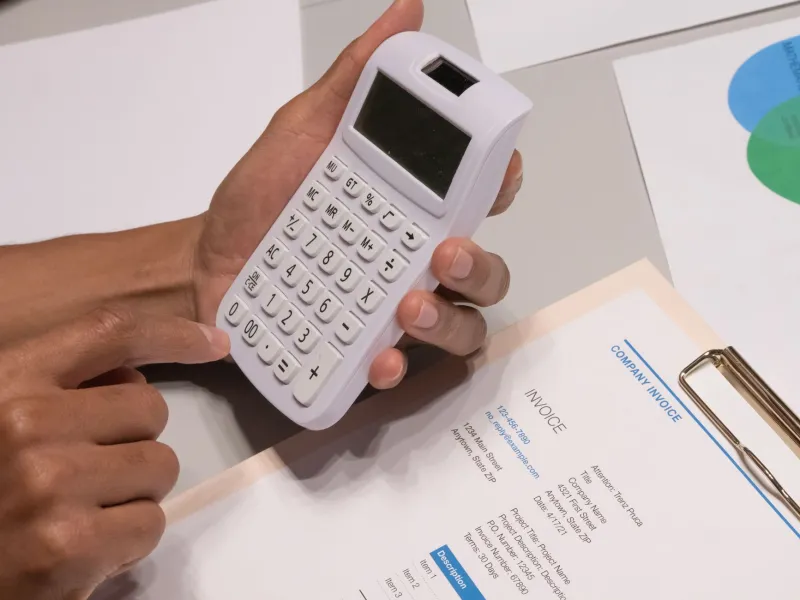
Photo: freelance designer desk paperwork invoice laptop natural light, via hintergrundbild.org
There is a point in every freelance job where the interesting part stops and the admin starts. The file is delivered, the emails are winding down, and you fire off an invoice with the enthusiasm of someone defrosting a freezer. Job done, you think. Except that invoice is the final artefact of the whole relationship — the last thing a client looks at before they decide, quietly, whether you were a good idea.
I've come to think of the invoice as the second half of the portfolio. The first half persuades someone to hire you. The second half persuades them to hire you again, recommend you to a colleague, or at the very least not wince when your name comes up in a budget meeting.
Nobody reads the terms. Everybody feels them.
Very few clients will study your payment conditions line by line. That isn't the point. What they absorb is the tone: whether you seem like someone who has done this before. A single-page PDF with a total, no due date and a mumbled request to "sort it when you can" reads as improvisation. Not because the client is judging you, but because ambiguity creates a tiny flicker of doubt, and doubt is expensive to undo.
Clarity, on the other hand, is strangely calming. A due date in plain words. A number to quote. A clear list of what the money is actually buying. None of that is glamorous, and all of it says: this person is organised, and my project is in safe hands.
A deposit isn't an accusation
Asking for money up front can feel awkward, particularly with a client you've just met and quite like. So people soften it, or drop it, or invent a vague arrangement that collapses the moment the project runs long.
Better to reframe it honestly. A deposit is a booking, not a suspicion. Something as simple as "Projects are held in the diary with a 50% deposit, with the balance due on delivery" lands far better than a defensive paragraph about trust. For bigger jobs — a website build, a brand refresh, a few days of filming — a third up front and staged payments after that is normal, expected, and quietly reassuring. The client can see their outlay matched against progress instead of handing over a chunky sum and hoping.
And for you? A deposit means month one of a three-month job isn't funded out of your own optimism.
Give the money somewhere to land
Vague invoice lines cause more delay than any other single thing. "Design work — £1,200" invites questions. The finance person receiving it doesn't know what it covers, so they email someone, who emails you, and a fortnight evaporates.
Being specific is not admin pedantry; it's a courtesy. Name the deliverables, name the rounds of revisions, and — this is the bit people skip — name what isn't included.
Brand identity: logo suite, type system, colour palette, two rounds of revisions. Excludes print production, photography and copywriting, quoted separately on request.
That final sentence prevents about four awkward conversations a year. It costs you nothing to write and it makes you look like someone who has thought about the whole project rather than just the fun middle of it.
Saying the late-payment bit without sounding like a bailiff
UK small businesses have proper backing here. Under the Late Payment of Commercial Debts (Interest) Act 1998, you can charge statutory interest — eight per cent above the Bank of England base rate — plus fixed compensation that scales with the size of the debt. You almost certainly won't need to invoke it often, and you should probably never lead with it.
But you can put a light hand on the tiller. Fourteen days for small clients, thirty for larger organisations who genuinely need a purchase order, and a single sentence that sets the expectation without a snarl:
Invoices are due within 14 days. If something's going to be delayed, a quick note is all I ask — I'd much rather know than chase.
That last clause does a surprising amount of work. It gives an honest client an easy way to be honest, and it quietly marks the ones who go quiet for six weeks.
Three edits that take ten minutes
If you only change three things about the invoices you send in 2026, make them these.
- Put an actual date on it. Not "30 days" — a calendar date. People pay dates; they dither over durations.
- Make it payable in one pass. Account number, sort code, reference, and the exact name it should be paid to. If a client has to reply to ask how to pay you, you've added a week to your own life.
- End with what happens next. A line as small as "Thanks — once this clears I'll send over the final files and the brand guide" turns a bill into a step in a process. It also means the invoice isn't the last contact; it's a handover.
The quiet verdict
We spend hours polishing a homepage and roughly eleven seconds on the document that actually extracts money from another human being. That's backwards. Your site, your work, your emails and your invoice are all saying the same thing about you, and only one of them is read at the exact moment someone is deciding whether to pay you promptly or leave it until the next payment run.
A considerate invoice is not bureaucracy. It's the tidy handshake at the end of a good conversation — and in a small market where work travels by word of mouth, that handshake is worth more than the font you chose for your case studies.